
Goblin Camp Raid Encounter Guide (D&D 5e, Levels 1–5)

Hey everyone! I'm back with another encounter guide! This time we're talking Goblins.
Running a goblin camp raid is one of the best early-game encounters in Dungeons & Dragons (D&D 5e). It’s flexible, scalable, and perfect for teaching players how to manage combat, positioning, and resources.
This guide covers most of what you need to run a goblin camp encounter for levels 1–5, including encounter scaling, tactics, and how to run it on the tabletop.
What Level Should Players Be for a Goblin Encounter?
Goblin encounters are incredibly flexible and can be tailored for a wide range of party levels.
Level 1–2: Ideal for small ambush-style encounters
Level 3–4: Great for introducing goblin leaders and varied enemy types
Level 5: Best used as a full camp raid with multiple encounters
By adjusting the number and type of goblins, you can create encounters that feel challenging without overwhelming your players.
How Dangerous Are Goblins in D&D?
Goblins are often underestimated, but they can be surprisingly dangerous when used correctly.
Dungeon Masters have access to multiple goblin variants, including:
Goblin Minions
Goblin Warriors
Goblin Bosses
Supporting creatures like Bugbears
Individually, goblins are weak—but when used in groups, with ambush tactics and positioning, they become a serious threat, especially for low level parties.
Goblin Encounter Examples (4 Player Party)
Use these as a baseline for balancing your encounters:
I recommend following the Monster Manual 5E or 5E (2024) depending on what version you're playing.
Level 1 (Easy):
6 Goblin Minions
Level 2 (Moderate):
4 Goblin Minions
4 Goblin Warriors
Level 3 (Moderate–Hard):
6 Goblin Warriors
4 Goblin Bosses
Level 4 (Hard):
6 Goblin Minions
4 Goblin Warriors
2 Goblin Bosses
1 Bugbear
How to Run a Goblin Camp Raid (DM Guide)
The biggest mistake when designing goblin encounters is simply adding more enemies.
Instead, the real challenge comes from resource management.
Rather than one large fight, structure your goblin camp as multiple smaller encounters:
Outer patrols
Ambush points
Guard posts
Inner camp defenders
Final boss fight
This forces players to manage spell slots, health, and abilities across multiple encounters, making even basic goblins feel dangerous.
A level 5 party may easily defeat a single goblin encounter—but after 3–5 consecutive fights without rest, even simple enemies become a real threat.
Scaling the Goblin Camp Encounter
You can easily adjust this encounter to suit your party:
Low Level (1–2)
Focus on small ambushes
Avoid bosses
Keep encounters short and manageable
Mid Level (3–4)
Introduce goblin bosses
Add variety in enemy types
Use multiple encounters before rest
Level 5+
Add Bugbears or elite enemies
Increase encounter chaining
Force players to manage limited resources
Building a Campaign Around the Goblin Camp
One of the best ways to use this encounter is to build it over multiple sessions.
What I'd recommend is something like so:
Session 1: Party ambushed by goblins
Session 2: Increased goblin activity
Session 3: Stronger goblin forces appear
Session 4: Final lead-up encounters
Session 5: Full goblin camp raid
This creates a natural progression and makes the final encounter feel meaningful and earned, and it's easy enough to put a story spin on this, your adventurers are ambushed at low level, they beat it, head to town and are advised to "watch out for the goblins in the area", then when they say they've already slain a party of goblins, they're invited to speak with the leader of the village or town, and are given a story quest to start spearheading the removal of goblins from the area.
How to Run a Goblin Camp Raid for D&D 5e on the Tabletop
To run a goblin camp raid effectively on the tabletop, you’ll typically need:
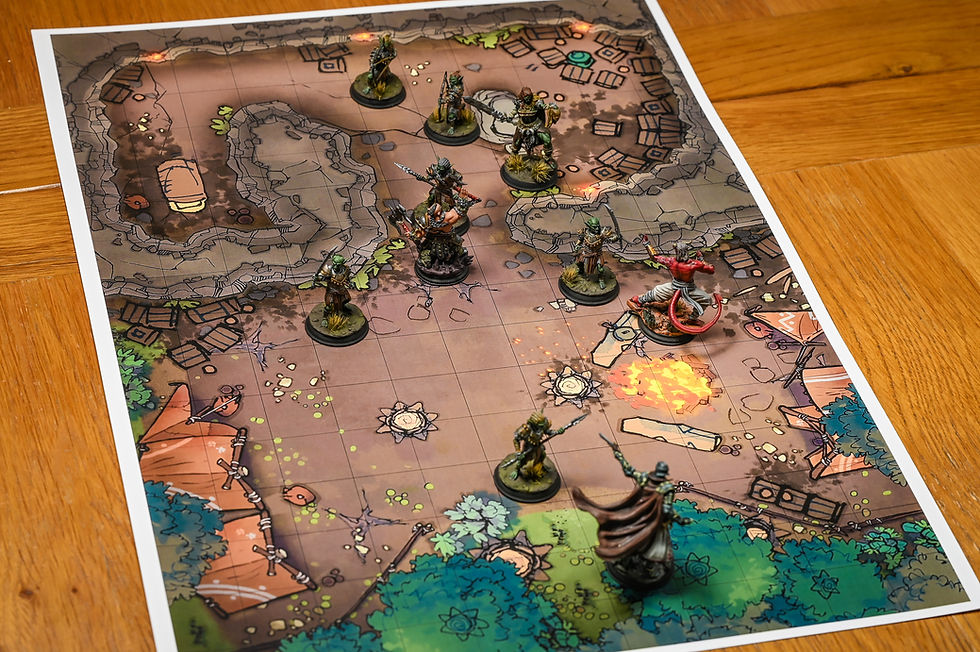
6 - 12 goblin miniatures total
1 bugbear miniature
Terrain such as camps, barricades, and forest elements
Using high-detail resin miniatures makes it easier to track combat and significantly improves immersion for players—especially in multi-encounter sessions like this.
Recommended Miniatures for a Goblin Camp Raid
To bring this encounter to life, you can use:
Goblin minions and warriors
Goblin bosses
Bugbears
Terrain and basing elements
If you're looking for some Goblin mini's ready for paint, look here.
Looking for a complete encounter solution? Explore our DM Stash bundles, which include themed enemies, maps, and full campaign content ready to run here.
Final Thoughts
Goblin camp raids are a staple of early D&D campaigns for a reason—they’re flexible, engaging, and easy to scale.
By focusing on encounter structure and resource management rather than just increasing enemy numbers, you can create memorable and challenging sessions for your players.
With the right setup, this simple encounter can become a highlight of your campaign.
If you're looking for more blogs, check our past blogs here!
If you're looking for beasties to throw at your party, check here!


Comments